In today’s globalized world, travel has become increasingly frequent. For smokers and vape enthusiasts, the question of whether they can bring their beloved disposable vapes through customs has emerged as a major headache. “Can you bring a disposable vape through customs?” is a query that plagues countless individuals. Have you ever hesitated over packing disposable vapes for an international trip, worried about being stopped at customs, facing fines, or even more severe consequences? Or perhaps, when returning home, you’ve longed to bring back unique disposable vapes purchased abroad but feared failing to clear customs?
These pain points not only dampen the travel mood but can also lead to financial losses and legal risks. According to relevant data, many travelers face issues with custom disposable vapes at customs annually. Understanding the regulations and precautions regarding custom disposable vapes has become crucial for smokers and vape enthusiasts. Let’s explore this issue to ensure a hassle-free journey.

Unveiling Customs Policies
Overview of Global Customs Policies
Global customs policies regarding disposable vapes vary widely, influenced by diverse factors such as national laws and regulations, public health considerations, and differing attitudes towards the vape industry. Some countries adopt a relatively open stance, allowing disposable vapes to be carried in under certain conditions. In contrast, others impose strict restrictions or even complete bans due to concerns about public health and the environment. These policy disparities often leave travelers confused and uncertain when crossing international borders.
Detailed Breakdown of Key Countries and Regions
United States
In the United States, vape regulation is shared between the federal and state governments. The FDA oversees vapes federally, but there’s no uniform national limit on disposable vapes at customs; excessive quantities may lead to seizures or legal issues. Many states strictly regulate vape flavors, including chocolate flavored vapes, and nicotine content. For example, California imposes restrictions on the sale and use of vapes, including chocolate flavored ones, in certain public areas.
United Kingdom
The UK government has confirmed that starting from June 1, 2025, the sale of disposable vapes will be banned simultaneously in England, Scotland, Wales, and Northern Ireland. UK customs maintain strict supervision over travelers bringing disposable vapes into the country. Disposable vapes that do not comply with relevant regulations are likely to be confiscated. The UK government believes that disposable vapes pose a significant environmental threat, and their colorful designs and diverse flavors are appealing to teenagers, which is detrimental to youth health. Starting from October 2026, the UK also plans to impose additional taxes on vapes, aiming to increase prices and discourage non-smokers from using them. These policy changes have made bringing disposable vapes into the UK more complex and sensitive.
European Union
Within the European Union, there is some coordination in vape regulation, but member states still retain a degree of autonomy. Overall, the EU’s regulations on vapes are stringent, requiring vape products to meet strict safety, health, and environmental standards. Some EU countries, such as Belgium, which banned the sale of disposable vapes starting from January 1, 2025, and France, which recently passed laws banning their sale, exemplify this trend. When carrying disposable vapes through EU customs, in addition to meeting EU-wide standards, travelers must pay special attention to the specific regulations of their destination country. For example, Germany has clear limits on nicotine content in vapes. If the nicotine content of a disposable vape exceeds the permitted level, it may not clear customs. The EU’s proposal to ban smoking and vaping in outdoor areas like beaches and playgrounds further reflects the increasingly strict regulatory trend.
China
Travelers entering China can bring 2 vape devices duty-free, along with 6 e-liquid cartridges or combined products, totaling no more than 12ml of e-liquid. Travelers to and from Hong Kong, Macau, and Taiwan can carry 1 vape device and 3 e-liquid cartridges (up to 6ml total) duty-free. Short-term frequent travelers are limited to 1 vape device and 1 cartridge, with a maximum of 2ml. Vapes without marked e-liquid capacity are banned, and those under 16 cannot carry vapes. Excess quantities or indivisible items may be fully taxed.

Key Factors Affecting Customs Clearance
Battery Issues
Disposable vapes typically contain built-in lithium-ion batteries to power the atomizer. During transportation, lithium-ion batteries pose certain safety risks. When subjected to impacts, high temperatures, or short circuits, they may catch fire or even explode. This not only threatens aviation safety but also presents challenges for customs supervision.
Airlines have strict regulations regarding the transportation of lithium-ion batteries. According to the International Air Transport Association (IATA)’s Dangerous Goods Regulations (DGR), electronic devices with lithium-ion batteries must meet specific packaging and transportation requirements. For example, the rated energy of lithium-ion batteries in carry-on electronic devices should not exceed 100Wh; for batteries with an energy of more than 100Wh but not exceeding 160Wh, up to two can be carried on board with airline approval and are not allowed to be checked in; batteries with an energy exceeding 160Wh are strictly prohibited. When inspecting disposable vapes, customs also focus on whether the batteries meet relevant safety standards and transportation regulations. If the batteries pose safety risks or do not comply with the rules, travelers may be required to dispose of the vapes or face other penalties.
E-Liquid Composition
E-liquid, the key component of disposable vapes, contains nicotine, propylene glycol, glycerin, and flavorings. Nicotine, being addictive, is regulated differently worldwide; for instance, Russia limits nicotine in hookah tobacco to 3.5%, while China caps e-liquid nicotine concentration at 20mg/g and release per puff at 0.2mg. Travelers may face customs issues if their vape’s e-liquid doesn’t comply with the destination’s regulations. Additionally, some countries control flavorings and additives, making it essential to understand these rules for smooth customs clearance.
Packaging and Labeling
Clear and precise packaging and labeling are crucial for smooth customs clearance of disposable vapes. Labels must include details like brand, specifications, composition, nicotine content, production, and expiration dates. In China, vape packaging should also display product name, production date, validity period, quantity, specifications, battery capacity (if applicable), customer service contact, and comply with national laws and standards. For exports, packaging must meet the destination country’s regulations and include the tobacco monopoly license number; unclear or incomplete labeling may lead to customs inspections or product detention.
Practical Tips for Smooth Customs Clearance
Pre-travel Preparations
Before traveling, it is crucial to understand the customs policies of the destination country or region in advance. You can obtain the most accurate information through official customs websites, official social media accounts, and other channels. Meanwhile, collecting materials on local laws and regulations regarding vapes can help you better understand the local policy environment. Prepare relevant supporting documents, such as purchase receipts and product manuals. These documents can prove the legal origin and compliance of the vapes, increasing the chances of smooth customs clearance. For business trips, you can also carry relevant business documents from your company to justify the necessity of carrying vapes.
Choosing the Right Transportation Method
Carry-on
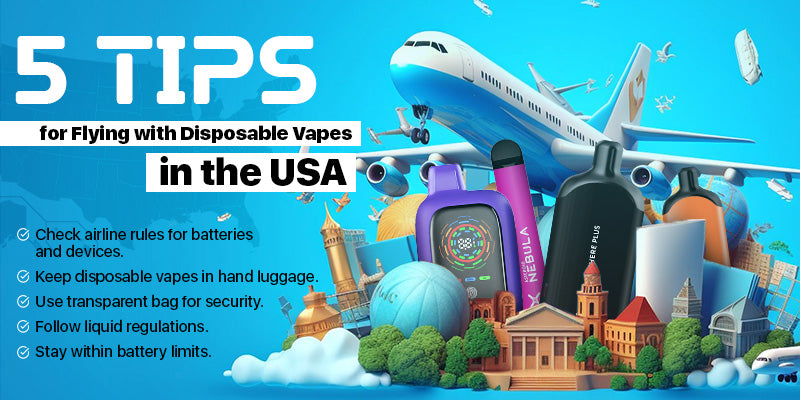
The advantage of carrying disposable vapes in your carry-on luggage is the convenience of access and better protection against damage. However, it is important to note that airlines and customs have strict regulations on carry-on electronic devices and lithium-ion batteries. Ensure that the vape batteries meet safety standards and that the quantity is within the permitted range. When going through security checks, take out the vapes proactively and cooperate with security personnel to avoid unnecessary troubles.
Checked Luggage
Checked luggage can relieve the burden of carrying vapes on your person, especially when carrying a larger quantity. Before checking in, properly package the vapes using shock-absorbing materials and sturdy outer packaging to prevent damage from compression or impact during transportation. Separate the batteries from the vape devices to avoid short circuits. Also, be aware of the airline’s restrictions on lithium-ion batteries in checked luggage to ensure compliance.
Mailing
Mailing disposable vapes is a convenient option, especially for advance arrangements or when they cannot be carried on the person. Choose reliable international courier services such as DHL, UPS, or FedEx, which have extensive international transportation experience and professional customs clearance teams, increasing the likelihood of the package reaching its destination smoothly. Before mailing, carefully understand the transportation requirements of the courier company and the customs regulations of the destination country. Fill in the cargo list accurately and declare the correct value to avoid the package being detained or returned due to incorrect or missing information.
Communication with Customs Officers
When communicating with customs officers, courtesy and respect are fundamental. Use polite language such as “please” and “thank you” to demonstrate good manners. Actively cooperate with customs inspections, proactively present relevant documents, and follow their instructions. If you have questions about customs policies or inspection procedures, avoid arguing and instead ask calmly for reasonable explanations and solutions. Express your intentions and situation clearly and concisely, avoiding vague or misleading language. If there are language barriers, use translation tools or seek assistance to ensure accurate communication.
Frequently Asked Questions
What are the consequences if I carry more disposable vapes than the regulated quantity?
If the quantity of disposable vapes carried exceeds the limit set by the destination country or region, various consequences may follow. In some countries, customs may confiscate the excess; in others, they may require travelers to pay additional tariffs on the excess amount. In severe cases, people may regard it as smuggling, resulting in fines or even criminal charges. For example, in China, if the quantity of disposable vapes carried by travelers exceeds the duty-free allowance but is determined to be for personal use, customs will only levy taxes on the excess part, and will apply full-value taxation to indivisible single items. Carrying a large quantity of tobacco products without declaring to customs may lead to smuggling violations. Therefore, it is essential to understand and comply with relevant regulations before traveling to avoid unnecessary troubles.
Can I carry a large number of disposable vapes in checked luggage?
Although disposable vapes can be carried in checked luggage, it does not mean that there are no limits. On one hand, airlines have weight and volume restrictions on checked luggage. On the other hand, customs also inspect items in checked luggage. If the quantity of disposable vapes exceeds reasonable personal use limits or violates regulations, necessary actions will be taken. As mentioned earlier, different countries have different requirements for the quantity and entry of disposable vapes. Even when checking in, it is necessary to ensure compliance with the destination country’s customs policies. Therefore, it is not advisable to carry a large number of disposable vapes in checked luggage to avoid potential risks.
How can I determine if the packaging and labeling of my disposable vapes meet the requirements?
Ensure disposable vape packaging clearly displays brand, specifications, composition, nicotine content, production date, and expiration date. Different countries have varying regulations; for instance, China requires additional information such as product name, battery capacity (if applicable), customer service number, and packaging dimensions. Exported products must comply with destination country standards, including marking the tobacco monopoly production license number. Always review the destination country’s regulations and compare them with your vape packaging to ensure compliance.
If I am stopped by customs, how can I communicate with customs officers to achieve the best outcome?
If stopped by customs, remaining calm and polite is key. First, actively cooperate with customs inspections and do not resist or hide anything. Clearly and concisely explain to customs officers the purpose, quantity, and whether you are aware of relevant regulations regarding the disposable vapes you are carrying. If you have questions about customs handling, avoid arguing and instead calmly ask for the policy basis and processing procedures. Proactively present supporting documents such as purchase receipts and product manuals to prove the legality and personal use nature of the vapes. If there are language barriers, request translation assistance from customs officers or use translation tools to ensure accurate communication. Through good communication and cooperation, it may be possible to obtain a more favorable outcome.
Conclusion and Reminder
Whether disposable vapes can pass through customs smoothly depends on multiple factors, including customs policies of various countries and regions, vape batteries, e-liquid composition, and packaging and labeling. Before traveling, it is essential to fully understand the relevant regulations of the destination country, make adequate preparations, choose the appropriate transportation method, and maintain courtesy and cooperation when communicating with customs officers. Complying with customs regulations is not only a matter of respecting the law but also crucial for protecting one’s own rights and ensuring a smooth journey. We hope that every vape enthusiast can enjoy their travels with peace of mind, avoiding unnecessary troubles related to disposable vape customs clearance by understanding the rules.